I plan Thanksgiving with AI now, and I didn’t expect to. I spent my working life in kitchens, and I’m 68. I’ve cooked plenty of holiday dinners for a crowd. You’d think I wouldn’t need help.
The cooking isn’t the hard part. The hard part is the math, the list, and the oven. How much of everything do I need? What do I buy? And how do I get a turkey and four sides out of one oven, all hot at the same time?
So this year I gave that part to AI. I pasted my own recipes into Grok and asked for three things: scale the recipes, make one shopping list, and build a timeline. Here’s how I did it, with the prompts you can copy.
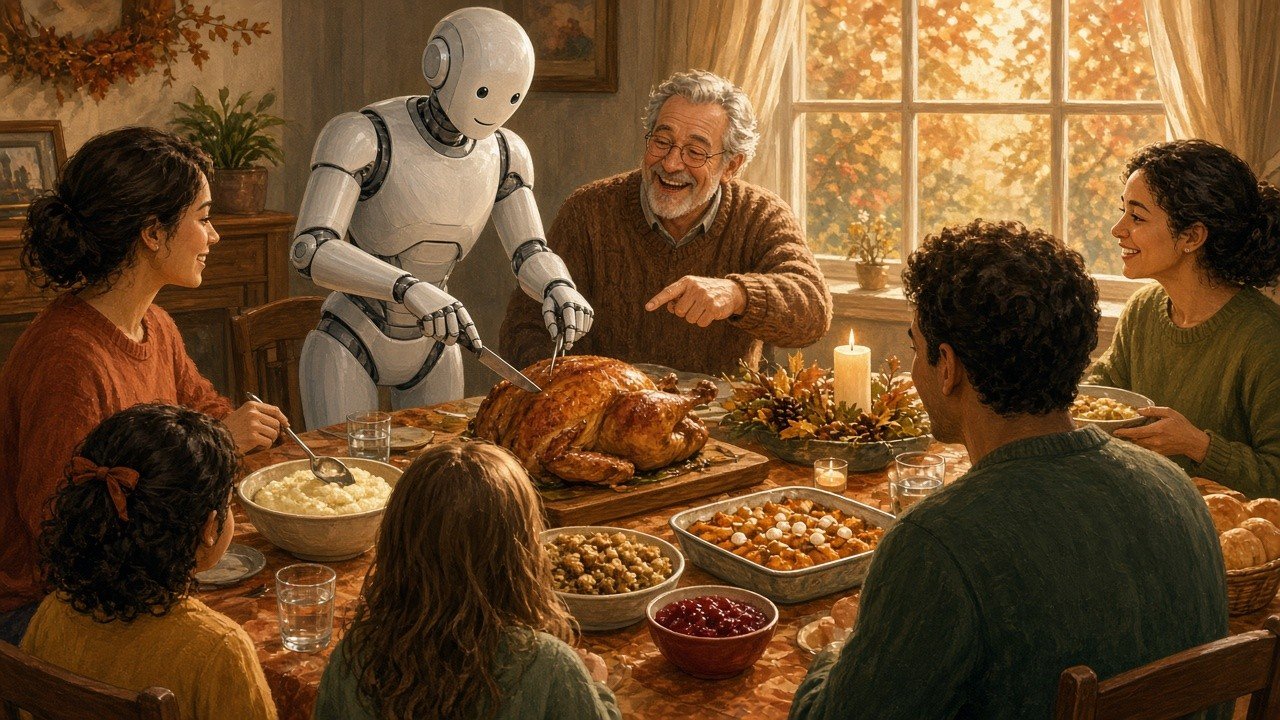
My menu
These are my recipes. I’ve made them for years.
- Basil pesto and rosemary turkey with pan-vegetable gravy
- Italian sausage and wine-roasted chestnut stuffing
- Honey hazelnut sweet potatoes
- Blood orange cranberry sauce
- Truffled mashed potatoes
The stuffing and the mashed potatoes are the two people ask for every year. If I skipped either one, I’d hear about it.
The full recipes are in a free packet called Chef Andrew’s Thanksgiving Recipes. It goes to anyone who signs up for my newsletter. Sign up here, and the packet comes in your welcome email.
Step 1: Scale the recipes to your table
My turkey recipe is written for a 15 to 20 pound bird, which feeds about 12 people. Your table may be bigger or smaller. My side dishes were written for different crowds over the years, so they don’t all match.
Scaling means changing the amounts so the recipe feeds the number of people you actually have. AI is good at this kind of arithmetic. It’s not perfect, so read what it gives you.
Paste your recipe in, then add this:
Here is my recipe: [paste recipe]. It serves [number] people. Scale it to serve [number] people. Keep the same units I used. Round to amounts I can actually measure in a home kitchen. Flag anything that shouldn't be scaled straight up, like salt, spices, or baking time.That last line matters. You don’t always double the salt when you double the potatoes. A cook knows that. The AI may not, unless you ask.
Step 2: One shopping list
Once everything is scaled, I want one list, not five. If three recipes call for butter, I want one line that says how much butter in total.
Here are my scaled Thanksgiving recipes: [paste all of them]. Combine every ingredient into one shopping list. Add up anything that appears in more than one recipe. Group the list by where it is in the grocery store: produce, meat, dairy, baking, pantry. Leave off salt, pepper, and oil. I'll check those myself.Then I go through the list with a pencil before I go shopping, and I cross off what’s already in my cupboard. The AI doesn’t know what’s in my pantry. I do.
Step 3: A timeline that works back from dinner
This is where it really helps. I have one oven. The turkey roasts at 325°F. The stuffing and the sweet potatoes want 375 to 400°F. Those can’t happen in the same oven at the same time.
The trick every restaurant cook knows is the rest. When the turkey comes out, it rests 20 to 30 minutes before you carve it. That frees the oven. You turn it up and the sides go in.
A timeline that works backward starts with the time you want to sit down and counts back from there. Here’s the prompt:
I want to serve Thanksgiving dinner at [time]. I have one oven and [number] burners. Here are my dishes and their cooking times and temperatures: [paste]. The turkey is [weight] pounds and roasts at 325°F. It rests 20 to 30 minutes after it comes out, and I'll use that time to bake the sides at a higher temperature. Work backward from dinner and give me a timeline with clock times. Include what I can make the day before.Read the timeline like a head chef reading a new cook’s prep sheet. Does it give the turkey enough time? Did it forget the gravy? Are two things on the same burner at once? If something’s off, tell it and ask it to fix that part.
What happened when I planned Thanksgiving with AI
I used Grok for all three prompts.
Scaling. I asked it to take my truffled mashed potatoes from 10 to 12 servings down to 4. Every amount checked out. Five pounds of potatoes became 2 pounds, and a pound of butter became 6 tablespoons. It also flagged the truffle oil, salt, herbs, and boiling time as things to go by taste, not by math.
The shopping list. One list, grouped by aisle, with no salt, pepper, or oil, just as I asked. It called for a pound and a half of butter for 4 people. That looks high, so check it against your recipes. And it put cheesecloth and foil on the grocery list. Not wrong, but a funny place for them.
The timeline. I changed the prompt to fit my kitchen: dinner at 4:30 pm, one oven, four burners and a center griddle burner, and a 22 pound turkey. The turkey math was solid. Turkey in at 11:00, 165°F around 4:00, then a 30-minute rest. That matches the USDA’s 4½ to 5 hours for a 20 to 24 pound bird.
Three things a chef would catch:
- It baked the stuffing at 9:15 in the morning and said it could sit at room temperature. That breaks the 2-hour rule, and its own reminder at the bottom said so.
- “4:30 carve and serve” leaves no time to carve. Start carving around 4:15.
- It tried to fit the sides in around the turkey. My oven only fits the turkey, so the sides wait for the rest.
How I actually do it. The day before, I prep the yams and the stuffing, cut all the vegetables, brown the sausage, and make the stock. I’d make the cranberry sauce the day before too. It’s easy to forget. On the day, all I do is assemble. When the turkey comes out, I finish the stuffing in a pan, then it goes into the oven with the yams while the bird rests. The mashed potatoes and gravy are the last things I make.
If I had a big second oven in the basement like my grandmother did, I’d cook everything at once.
I use AI at restaurants too: here’s how.
AI got me most of the way there. My job was to read it the way a head chef reads a prep sheet and fix what didn’t fit my kitchen. So tell the AI about your own oven and burners, the way I did.
Food safety: the parts I don’t leave to AI
These rules come from the USDA, the government agency that handles food safety for meat and poultry. Don’t let a chatbot talk you out of them.
- Thaw the turkey in the fridge. Allow about 24 hours for every 4 to 5 pounds. A 20 pound bird needs several days, so plan ahead.
- Don’t rinse the turkey. Rinsing doesn’t make it safer. It splashes germs around your sink and counter.
- Use a thermometer. The turkey and the stuffing both need to reach 165°F. Don’t go by color, a pop-up timer, or how long it’s been in the oven.
- Get leftovers into the fridge within 2 hours. Don’t leave the platter on the table all afternoon.
The full guide is here: USDA: Let’s Talk Turkey, Roasting.
If the AI’s timeline ever disagrees with these rules, the rules win.
Two tools I’d own
You don’t need much special gear. These two make the day easier:
- An instant-read thermometer, like the ThermoWorks ThermoPop 2. It’s the only honest way to know the turkey hit 165°F.
- A sturdy roasting pan with a rack, like the Cuisinart Chef’s Classic 16-inch roaster. The rack lifts the bird above the vegetables for the gravy.
As an Amazon Associate I earn from qualifying purchases.
The cook still runs the kitchen
AI did the arithmetic and the paperwork. It didn’t taste the gravy, and it didn’t know my oven or my guests. I read every line, fixed what was wrong, and cooked the meal myself.
That’s the way I like it. It’s a good prep cook. I’m still the chef.
If you try these prompts this year, tell me in the comments what you’re cooking and how the timeline worked out. And if you want my stuffing and mashed potatoes, the free recipe packet is waiting for you.
— Andrew
Want more plain-English AI help? Get my free 9-page starter guide.
The guide arrives in your welcome email right after you confirm.