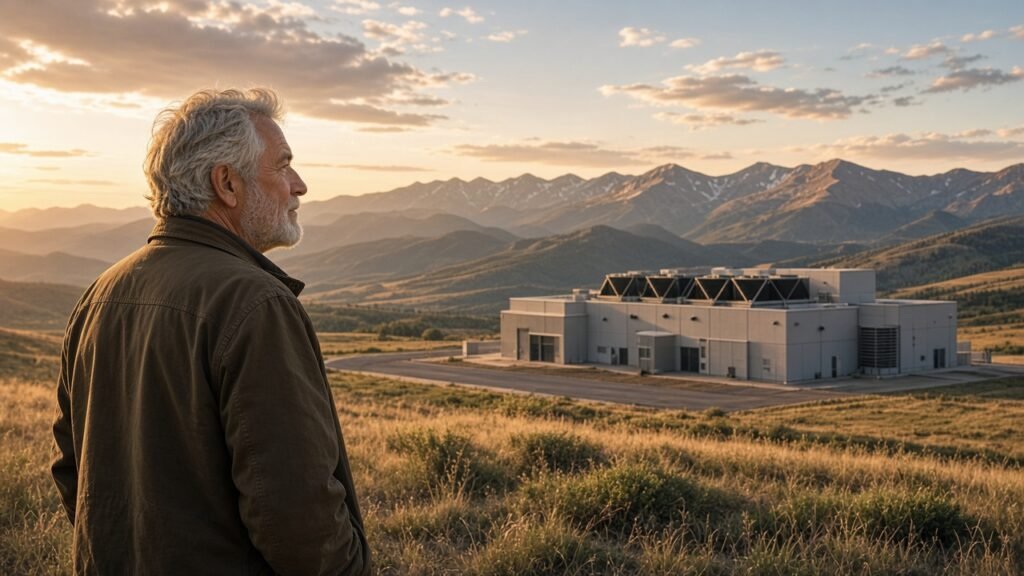
I watched a Denver-area city council meeting where people raised their hands in support of blocking data centers. Noise and other worries were part of the conversation.
It bothered me. I’m genuinely excited about AI’s future, and I sometimes find myself defending that excitement when people wonder if I’m crazy.
But people asking about their water, electricity, or a steady hum near their homes deserve answers. Being excited about AI doesn’t mean those concerns aren’t real.
I’m 68. I don’t want to argue anybody into liking AI. I want us to understand enough to make informed decisions.
Why I keep defending AI
I see possibilities worth being excited about: help understanding something complicated, asking a question without feeling embarrassed, or getting a clearer explanation when the first one doesn’t make sense.
That’s what I want more people to have a chance to explore. Not blind trust. Not a promise that every project is a good idea.
We can be hopeful about AI and careful about the buildings that run it. Those aren’t opposite positions.
My morning with AI
I’ve been called worse than an AI fan.
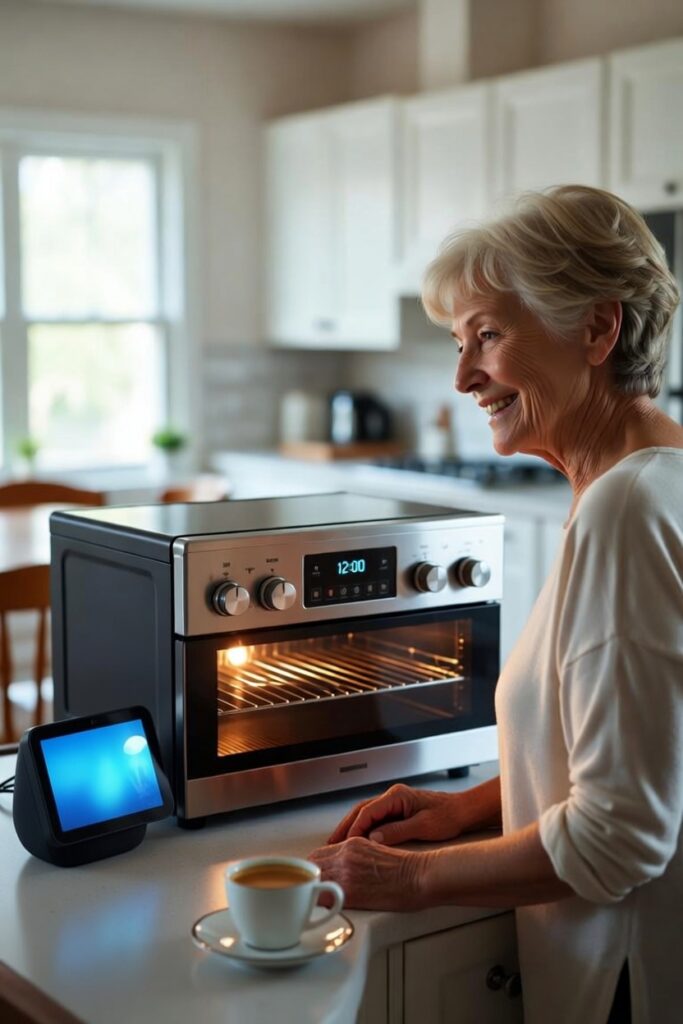
I ask Alexa for the weather, have her set timers, and ask where my Amazon packages are. I have a smart coffee brewer and a fridge with built-in tech. My electric car has plenty of AI built in, too. Every day, I notice more things AI makes better.
But I want to be careful about what I call AI. Amazon explains that Alexa uses AI for speech recognition and understanding requests. Speech recognition means turning spoken sounds into words a computer can process.
Setting a timer or looking up a package’s recorded status isn’t, by itself, proof of AI. The voice conversation can involve AI even when the task underneath is straightforward. Amazon also uses machine learning to predict delivery speeds, according to Amazon Science. Machine learning is a way computers learn patterns from examples to make predictions.
Likewise, a smart or connected appliance may use little or no AI. It can simply follow programmed instructions. I wouldn’t claim my brewer or fridge uses AI without checking the particular model.
Some car features use AI on the car’s own computer, rather than sending every decision to a data center; NVIDIA’s explanation of vehicle computing gives examples. Driver assistance means technology that helps with parts of driving; it doesn’t automatically mean a car can drive itself. I’m not claiming any particular feature for my car here.
Many voice-assistant functions rely on the cloud, as Amazon’s Alexa explanation shows. The cloud means computers reached over the internet, housed in real data centers—not something floating overhead.
That’s the connection for me: these buildings aren’t just behind a chatbot. They’re also behind some familiar everyday helpers.
What I tried, and what happened
While I was waiting on my AI assistant, I went to a different AI, Gemini, to see what it would say. I’ll admit I felt a little like I was cheating!
It showed me this is a big concern across the whole state, and in other states too, and that people have valid reasons. It made me realize the more people are educated, the better, so they can make informed decisions, especially if they’re going to attend these meetings and want to know what’s going on.
That was what Gemini told me. The specific Colorado examples below were then checked against local reporting and city records, rather than taking an AI answer as proof.
Skip to the part you’re wondering about
- My morning with AI
- Is this happening around Colorado?
- Why are data centers so big?
- How much electricity do they use?
- What about water?
- Are the noise complaints real?
- What happens when I ask AI a question?
- What’s being tried to make them cleaner?
- Where I wouldn’t trust the headlines—and where I would
- Questions to ask your AI
Is this happening around Colorado?
Yes. This is a wider conversation, not just one meeting. Here’s a snapshot checked on November 8, 2026:
- Brighton: adopted a one-year moratorium on new data center applications, according to CBS Colorado. A moratorium is a temporary pause, not necessarily a permanent ban.
- Aurora: debated a temporary pause and rules for future development; the council rejected a six-month pause while directing work on standards, as Denver7 reported. That’s not the same as adopting a citywide ban.
- Littleton: approved a six-month pause on November 3 while staff study energy, water, noise, and other impacts, according to the Littleton Independent.
- Colorado Springs: is reviewing its rules, including noise, water, and public participation, following an independent policy review, the city reported on November 3.
- Loveland and Commerce City: also approved pauses on certain new data center applications, documented by BizWest and Commerce City’s own council recap.
These examples are broader context, not an identification of the meeting I watched. The rules and proposals differ, and they can change. It’s a fair conversation to have.
Why are data centers so big?
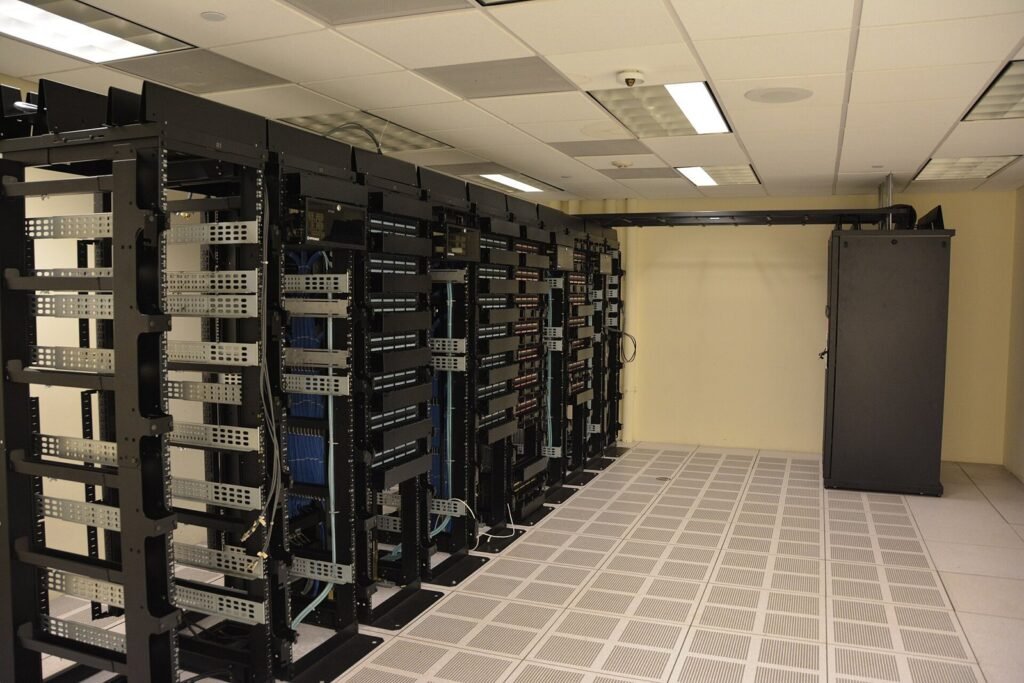
A data center is a building that houses computers and the equipment that keeps them running. Many serve everyday internet needs as well as AI—not AI alone.
Inside are rows of servers. A server is a computer that processes or stores information for other computers and their users.
Some contain GPUs. A GPU, short for graphics processing unit, is a computer chip that can do many calculations at once, which makes it useful for AI.
The building also needs equipment to move information between computers, electrical equipment, backup power, and cooling. Put all that together at a large scale and you need a lot more room than a desk and a laptop. The International Energy Agency explains these parts.
A warehouse photograph tells us something about size. It doesn’t tell us how much water that particular building uses or how it sounds from someone’s porch.
How much electricity do they use?
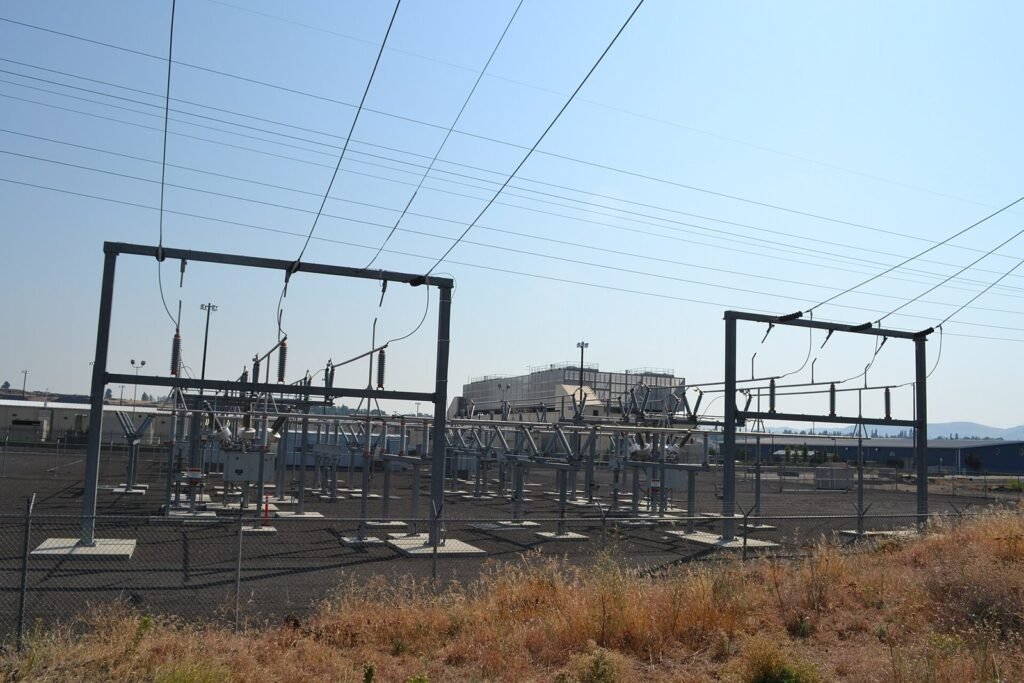
A lot—and it matters whether we’re talking about AI alone, all data centers, one building, or the whole country.
The U.S. Department of Energy’s summary of Berkeley Lab’s 2024 report says all U.S. data centers used about 4.4% of the country’s electricity in 2023: 176 terawatt-hours. A terawatt-hour is a large unit of electrical energy, equal to a billion kilowatt-hours; kilowatt-hours are the units on a home electricity bill.
For a rough comparison, that’s about 16 million residential customers’ annual electricity purchases, using the Energy Information Administration’s 2022 average of 10,791 kilowatt-hours per customer. That’s a comparison using an older household benchmark, not a claim that those homes lost their electricity.
Worldwide, the International Energy Agency’s 2025 report estimated that all data centers used about 1.5% of global electricity in 2024. Its central projection put their annual use at about 945 terawatt-hours in 2030, more than double the 2024 estimate of 415. A projection is an informed estimate of what could happen, not a future meter reading.
The agency’s April 2026 update reported that data center electricity demand grew 17% in 2025. It also said energy use per AI task is falling, but growing use keeps pushing total demand up.
So better efficiency is good news. It isn’t proof that total electricity use will fall. And a national percentage doesn’t tell a town whether its local power system can handle a big new customer.
What about water?
The computers produce heat. Some cooling systems remove that heat by evaporating water. Evaporation means liquid water turns into vapor in the air, rather than returning directly to the local water supply.
Berkeley Lab’s 2024 report estimated that U.S. data centers directly consumed about 66 billion liters of water in 2023, or about 17 billion U.S. gallons. That’s all U.S. data centers, not AI alone, and it doesn’t include water consumed by the power plants supplying their electricity.
For a volume comparison, the EPA’s WaterSense page gives a rough figure of 400 gallons a day for a family of four. At that rate, the national data center figure is roughly the volume 120,000 families would use in a year.
That is only a way to picture the amount. Household water use includes water that can return through drains; water consumed by evaporation doesn’t return that way. These aren’t equivalent effects on a water supply.
There isn’t one water figure for every building. Cooling design, weather, and the source of its electricity matter. A useful local question is: How much water will this site need during the hottest, driest part of the year, and where will it come from?
Are the noise complaints real?
Yes. They shouldn’t be waved away as people being afraid of computers.
Loudoun County’s official explanation identifies cooling equipment, electrical equipment, and backup generators as noise sources. It describes a persistent hum or buzz and explains why a steady tone can be more aggravating than background noise at a similar volume.
That doesn’t mean every data center is equally loud. It means a promise to meet a general noise limit deserves follow-up questions: What will people hear at nearby homes? At night? Who checks after the building opens, and what happens if there’s a problem?
I wouldn’t ask someone to ignore a constant hum just because I like AI.
What happens when I ask AI a question?
For an online AI chat, your question travels to computers running the service. The system processes your words and uses patterns learned earlier to generate an answer, which comes back to your screen. Google’s plain-language guide to language AI explains how these systems learn from data and generate text.
You’ll hear this called inference. Inference means using an already-trained AI to produce an answer, rather than teaching the whole system from scratch each time you ask something.
One useful measurement comes from Google’s August 2025 disclosure. Google estimated 0.24 watt-hours of electricity and 0.26 milliliters of cooling water for its median Gemini Apps text prompt, based on May 2025 data. A prompt is what you ask or tell an AI; median means the middle of a ranked set, not the arithmetic average.
For scale, 0.24 watt-hours would run a hypothetical 10-watt light for about a minute and a half. That’s arithmetic to help picture the energy, not a measurement of anyone’s lamp.
Those figures are Google’s own findings, not independently verified. They describe serving text answers—not the full cost of training AI or manufacturing its computers—and the water estimate doesn’t include electricity-generation water. They aren’t a universal figure for Grok, Copilot, Claude, every Gemini answer, or every kind of task.
A small amount for one answer and a large total across many users can both be true.
What’s being tried to make them cleaner?
Better cooling and less wasted work
Microsoft described a new cooling design in December 2024 that recirculates water without evaporating it for cooling. That doesn’t mean every Microsoft building already uses it, or that the entire site needs no water. Microsoft also acknowledges a trade-off: avoiding evaporation can increase electricity use.
Google’s measurement work describes more efficient chips, software, and ways to reduce wasted energy when computers aren’t busy. These are practical improvements, not a promise that growth has no cost.
Solar and nuclear power
Solar panels and wind power can help supply cleaner electricity. But solar output varies, so a reliable supply also needs other power sources, storage, or support from the wider electricity system.
Nuclear power can supply electricity without burning fossil fuels while it operates. New nuclear projects still have to be built and approved; an announcement isn’t an operating power plant.
The International Energy Agency’s supply analysis discusses renewables and nuclear alongside a less comforting fact: natural gas and coal also help meet growing demand. Cleaner options are part of the answer, not proof the problem is already solved.
What about solar power from space?
This belongs in the future possibility category, not today’s fix for a neighborhood’s water or noise concerns.
NASA’s 2024 study examined collecting sunlight in space and sending energy down to Earth. Its full report describes using microwaves or lasers for that transmission. These would send energy in a directed beam to receiving equipment, which converts it into electricity.
NASA identified major engineering and cost hurdles. It studied a possible system operating in 2050; that was a study assumption, not a promised opening date.
Elon Musk is also talking about solar-powered AI computing in space, as Via Satellite reported in February 2026. But putting the computers in space is different from beaming power down to buildings on Earth. I wouldn’t combine those ideas into a claim that Musk has a working solution for today’s data centers.
Where I wouldn’t trust the headlines—and where I would
I wouldn’t trust a headline that turns every data center into an AI-only building, a forecast into a certainty, or one company’s per-answer estimate into a rule for every AI.
I also wouldn’t trust a reassuring headline that uses a small national percentage to dismiss a local water shortage or noise complaint.
I would give more weight to reporting that names the facility, shows the original documents, gives the year and units, and distinguishes what’s proposed from what’s approved and what’s actually operating.
And I wouldn’t use an AI answer as the final authority on a local project. I’d use it to help me understand the questions, then read the city’s records, the utility’s explanation, and reliable local reporting.
Questions to ask your AI
Try these in Gemini, Grok, Copilot, Claude, or another AI you use:
- “Explain data centers as if I’m new to this. Explain any technical word right after you use it.”
- “Does this headline describe all data centers or AI alone? Is the number measured or projected? Show me the original source and year.”
- “What questions should residents ask about this project’s electricity, water, and noise? Separate confirmed facts from things we don’t know.”
- “Give me the strongest fair explanation of the concerns and the possible benefits. Don’t guess anyone’s motives.”
Then open the sources. An AI can help organize the conversation; it doesn’t get the final vote on what’s true.
Why I’m still hopeful
I’m still excited about AI’s future. I also think learning more is better than asking people to choose between enthusiasm and concern.
I want useful AI, honest information, and communities that can make informed decisions about what gets built near them. I don’t think we have to give up one to ask for the others.
Sources
- Amazon Web Services, how Alexa uses AI and cloud computers: https://aws.amazon.com/blogs/aws/majority-of-alexa-now-running-on-faster-more-cost-effective-amazon-ec2-inf1-instances/
- Amazon Science, machine learning for delivery-speed predictions: https://www.amazon.science/latest-news/amazon-delivery-experience-the-bridge-between-supply-and-demand
- NVIDIA, onboard computing and the distinction between assistance and autonomous driving: https://www.nvidia.com/en-us/glossary/autonomous-vehicles/
- International Energy Agency, what data centers contain and the 2025 electricity outlook: https://www.iea.org/reports/energy-and-ai/energy-demand-from-ai
- U.S. Department of Energy, December 2024 summary of Berkeley Lab’s U.S. energy report: https://www.energy.gov/articles/doe-releases-new-report-evaluating-increase-electricity-demand-data-centers
- Lawrence Berkeley National Laboratory, 2024 U.S. Data Center Energy Usage Report, including water estimates: https://eta-publications.lbl.gov/sites/default/files/2024-12/us_data_center_energy_usage_report_lbnl-2001637.pdf
- Berkeley Lab researchers, peer-reviewed 2025 review corroborating the 2023 direct-water estimate: https://www.osti.gov/servlets/purl/2572888
- U.S. Energy Information Administration, average residential electricity purchases in 2022: https://www.eia.gov/tools/faqs/faq.php?id=97
- International Energy Agency, April 2026 update on electricity demand and efficiency: https://www.iea.org/news/data-centre-electricity-use-surged-in-2025-even-with-tightening-bottlenecks-driving-a-scramble-for-solutions
- U.S. Environmental Protection Agency, WaterSense family water-use comparison: https://www.epa.gov/watersense/watersense-kids
- Loudoun County, official explanation of data center noise: https://www.loudoun.gov/6405/Noise-Air-Quality-Concerns
- Google Cloud, explanation of language AI: https://cloud.google.com/ai/llms
- Google Cloud, August 2025 Gemini text-prompt energy and water disclosure: https://cloud.google.com/blog/products/infrastructure/measuring-the-environmental-impact-of-ai-inference
- Microsoft, December 2024 cooling design announcement and its limits: https://www.microsoft.com/en-us/microsoft-cloud/blog/2024/12/09/sustainable-by-design-next-generation-datacenters-consume-zero-water-for-cooling/
- International Energy Agency, electricity sources supplying data centers: https://www.iea.org/reports/energy-and-ai/energy-supply-for-ai
- NASA, overview of its January 2024 space-based solar power study: https://www.nasa.gov/organizations/otps/space-based-solar-power-report/
- NASA, full space-based solar power report, including microwave and laser transmission: https://www.nasa.gov/wp-content/uploads/2024/01/otps-sbsp-report-final-tagged-approved-1-8-24-tagged-v2.pdf
- Via Satellite, February 2026 reporting on Musk and proposed solar-powered orbital data centers: https://www.satellitetoday.com/connectivity/2026/02/02/spacex-acquires-xai-to-pursue-orbital-data-center-constellation/
- CBS Colorado, Brighton’s one-year pause and other municipal action, October 2026: https://www.cbsnews.com/colorado/news/2-colorado-cities-pass-temporary-bans-new-data-center-applications/
- Denver7, Aurora’s debate over a six-month pause and development standards: https://www.denver7.com/news/local-news/in-your-community/aurora-arapahoe-county/aurora-city-council-rejects-six-month-data-center-ban-as-it-pursues-new-regulations
- Littleton Independent, November 6 reporting on Littleton’s six-month pause approved November 3, 2026: https://www.littletonindependent.net/news/littleton-approves-six-month-moratorium-on-data-centers/article_e387cb97-3af6-4a5c-bb06-34cb840891fe.html
- City of Colorado Springs, November 3, 2026 policy review and work on local rules: https://coloradosprings.gov/news/city-welcomes-independent-review-data-center-policies-romer-institute
- BizWest, September 2026 reporting on Loveland’s pause: https://bizwest.com/2026/09/16/loveland-imposes-12-month-data-center-moratorium/
- City of Commerce City, September 2026 council recap documenting approval of a data center moratorium: https://www.c3gov.com/News-articles/City-Council-News/City-Council-Recap-Monday-Sept.-21
I write these with help from Grok and Grok Bot, my AI assistants. The experiences and opinions are mine, and I check the facts before publishing.
Want more plain-English AI help? Get my free 9-page starter guide.
You can download it right after you confirm your email.