Hi, it’s Andrew. I’m 68, a former restaurant guy, and I’m learning AI right alongside you.
This post has Amazon links. As an Amazon Associate I earn from qualifying purchases.
I photographed my closet and asked AI what fits me. I’m not trying to look trendy. I just want clothes that fit, in my own taste, so I don’t end up wearing white tube socks with flip flops.
The method is simple. Take a phone photo of your closet. Measure yourself once with a soft tape. Tell the AI what you like and where you’re going. Ask for a short shopping list and a checklist — likes, occasion, shoes, accessories — and tell it not to chase trends.
I tried the photo part, the measuring part, and a paid style app. Here’s what happened, what I got wrong, and a free prompt you can copy.
What I tried with an AI image consultant, and what happened.
I started the same way I started with my spice drawer: I took a phone photo. That time it was spices. This time it was my closet. (I wrote about the spice drawer here: I Photographed My Spice Drawer and Asked AI What to Toss.)
I also paid for a style app called StyleGenAI. The site says it’s a personal AI stylist that builds outfit ideas from your own closet. I gave it a photo and it made recommendations.
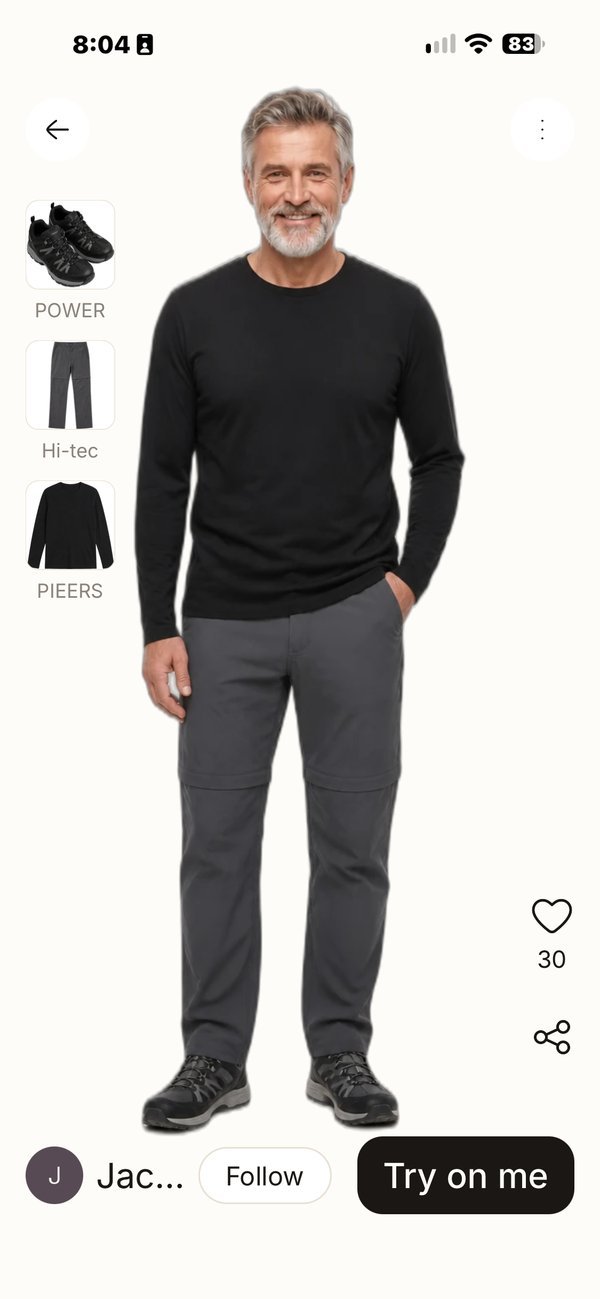
What I liked: it showed example people from all different demographics, in different clothing styles. A lot of them were younger styles, and some were a little older. The app has a closet section, a profile section, and an AI interface. Under Discover, you pick a look you like — say I pick Jacob — and press “try me on.” It uses the style questions I answered when I set it up. It shows the full outfit. You can say “I don’t like those shoes,” or “add to my closet,” and I think they’d ship it to you. It definitely opens up a lot of fashion opportunities.
What held me back was trying it out and having the confidence that it’s actually going to work, and having to worry about returning things. That sort of scared me. I just didn’t know if it was worthwhile for me to go through it, and I said, maybe I could do this myself with your help. I was talking to my AI assistant (I use Grok Bot). So that’s where the free prompt below comes in. You don’t need Grok Bot for it. It works in plain Grok, or in Copilot, Gemini, or Claude.
Then I measured myself at home with a soft tape, alone. A soft tape is the flexible cloth or plastic measuring tape you see at fabric stores — not the stiff metal one from the toolbox.
What surprised me is the numbers normally are more of a tailor’s kind of expression. Usually when I go to the store, I just look for the pants and try a shirt on, but I never know how to actually measure anything for myself. I don’t like to try stuff on in the stores, so I leave with stuff that doesn’t fit, and I’m lazy — I don’t want to return it. So I end up having clothes that don’t fit me, and I always say I’ll eventually fit in them. It was interesting seeing the correlation between the actual measurements and what’s going to fit. That was surprising. The challenge was measuring myself. It’s nice when you have somebody to help you, but when you’re by yourself, like I am, I had to get creative and use tape to hold the tape measure in place. I had to be very conscious of my posture to make sure I was getting an accurate measurement, and then trust the measurements to yield the right results.
I also learned three things the hard way:
- Sleeve length is not shoulder-to-wrist. My first sleeve number was 23 inches, way too short, because I measured from the tip of my shoulder to my wrist. The standard way starts at the center of the back of your neck, goes over the shoulder, and down to the wrist bone. When I remeasured that way, I got 33. Ten inches is a lot to be off by.
- Inseam from a tape on your body can undershoot. My tape inseam came out shorter than the pants that actually fit me uncuffed. So for pants length, I trust a pair that already fits: lay them flat and measure from the crotch seam down the inside leg to the hem.
- Waist has more than one number. The tape at my belly button (relaxed, not sucked in) was several inches bigger than where my belted jeans actually sit. And the number on the jeans label was different from the tape either way. So I write down both: where the pants sit, and the label size of a pair that fits.
The tape is useful. Real-world fit is the referee. Label size is just a nickname a brand gives a pair of pants.
How to measure yourself
Get a soft tape. Wear a thin shirt. Stand straight. Don’t suck it in. A helper is better if you have one. If you’re alone, tape one end of the soft tape in place (I taped an end to my shoulder for the shoulder width) and go slow.
Here are the basics, in plain English. These match the how-to-measure notes on sites like L.L.Bean and Dickies:
- Neck. Wrap the tape around the base of your neck, where a collar sits. Keep it snug, not tight. Leave room for one finger.
- Chest. Under the arms, across the fullest part of the chest, around the shoulder blades. Tape level and firm, not tight.
- Shoulders. Straight across the back from the tip of one shoulder to the tip of the other.
- Sleeve. Start at the center of the back of your neck (the bone that sticks out a little). Go over the point of the shoulder, down the outside of the arm, to the wrist bone. Keep the arm slightly bent.
- Waist. Measure where your pants actually sit when you wear them. Don’t suck it in. If you want, also note the number at your belly button relaxed — just label which is which.
- Hips / seat. Around the fullest part of your seat, tape level.
- Inseam. Best method: take a pair of pants that fits the way you like (uncuffed if that’s how you wear them). Lay them flat. Measure from the crotch seam down the inside leg to the hem. That number is your working inseam.
Write the numbers down once. You don’t have to put them in every AI chat forever — paste them when you’re shopping for clothes.
The free prompt (copy and paste)
This works in Grok. It also works in Copilot, Gemini, or Claude. Fill in the blanks. Attach a closet photo if your AI accepts images. Tell it your taste, not a trend.
You are my practical image consultant. I am an adult who wants clothes that fit my body and my taste. Do NOT chase trends, fashion weeks, or "what's hot this season." Prefer simple, wearable pieces I can re-wear.

Here is what I like and don't like:
- Likes: [e.g. solid colors, soft cotton, classic fit, no logos]
- Dislikes: [e.g. skinny fits, neon, itchy fabrics, white tube socks with flip flops]

Occasion / where I'm going:
- [e.g. casual dinners out, church, walking, a family birthday]

My measurements (inches). Use these; don't guess:
- Neck: [ ]
- Chest: [ ]
- Shoulders: [ ]
- Sleeve (center back of neck to wrist bone): [ ]
- Waist (where my pants sit): [ ]
- Hips: [ ]
- Inseam (from a pair that fits): [ ]
- Height: [optional]
- Shoe size / style I already wear: [ ]

Closet photo: [attached] / [or describe 5–10 pieces I already own]

Budget (optional): [e.g. under $X per item, or skip]

Please give me:
1. A short shopping list (5–8 items max) that fills gaps in my closet for this occasion.
2. A checklist I can use before I buy anything: likes/dislikes covered? right occasion? shoes that work? accessories (belt, socks, jacket) that match?
3. One outfit formula using things I likely already own, plus at most two new pieces.
4. Fit warnings based on my measurements (where online sizes often run small or large).

Keep the answer plain and short. No slang. No trend names.
What Grok gave me back
I ran the prompt in Grok with my closet photo and my measurements. I’ll be honest: I left the likes, dislikes, occasion, and shoes lines blank. Grok noticed. It told me those were missing and kept its answer general. That’s a lesson in itself. The AI can only work with what you give it, so fill in the blanks.
Here’s what it saw in my closet: mostly casual shirts, polos, and plaids, a few structured jackets, and a drawer of solid and graphic tees and sweats.
Its shopping list covered only the gaps:
- Two solid long-sleeve button shirts in navy and light blue, in soft cotton with no stiff dress fabric
- Dark navy or charcoal chinos, or relaxed jeans in the same cut as the jeans I already wear
- An unstructured navy or gray blazer or lightweight jacket. Unstructured means a softer jacket without stiff padding in the shoulders.
- Three plain crew-neck tees in white, heather gray, and navy
- A dark brown or black leather belt
- Simple dark sneakers or low boots in the style of shoes I already wear
It also gave me a rule I liked: “Skip anything that needs constant ironing or only works once.”
Before I buy anything, its checklist asks six things. Does it match the colors already on my rod? Does it work for the places I actually go? Does it go with my jeans or jackets? Does it fit my numbers? Do I have the belt, socks, and layer to go with it? Can I wash it and wear it?
Then it gave me one outfit, built mostly from what I already own: a button shirt from my closet, my jeans, and a dark jacket off the rod, with a tee underneath if the shirt is thin. The only new pieces are a belt and simple shoes.
Its fit warnings were the most useful part for me. Check the garment’s actual measurements, not just the size on the label. Online size charts for bigger shirts often run short in the sleeve, and with my 33-inch sleeve, that matters. Jackets can pull across the shoulders. In pants, look for a relaxed or stretch cut.
So I went back and filled in the blanks. I told Grok I like easy-care clothes with no ironing, solid colors, and relaxed fits, no skinny pants, and that I always wear a belt. I admitted I wear too many jeans. I said I’m open to contemporary styles that fit my age, and I need business casual for work events, dinners, and going out. For casual, polos and short sleeves are fine, but I usually don’t wear shorts. My old suits don’t fit since I lost weight, my dress shoes are very old, and I’d like one nice suit for special occasions. I’m realistic about money, and I don’t shop at designer stores. And for most of my working life, I lived in chef pants and chef jackets.
What a difference that made. Here’s the before and after:
- Shirts. Before, it suggested soft cotton button shirts. After, it suggested no-iron knit or performance button shirts in navy and light blue.
- Pants. Before, chinos or jeans. After, relaxed-fit dark navy or charcoal chinos in the same cut as my jeans, because I’d told it I wear too many jeans.
- Jacket. Before, a navy or gray blazer. After, an unstructured navy blazer that doesn’t pull at the shoulders. It also picked up that my old jackets don’t fit since the weight loss.
- New on the list: solid polos in navy or gray, better leather lace-ups or loafers for dinners, and one simple navy or charcoal two-piece suit, relaxed fit and easy-care, just for special occasions.
- Belt. Still a dark leather belt. Some things don’t change.
The rule changed too: “Skip anything that wrinkles easily or requires dry cleaning every wear.” The checklist now asks whether a piece works for dinners and events “without looking like chef gear or weekend jeans.” That one made me laugh, because it understood exactly where I’m coming from. It also asks whether a new piece goes with at least two things I already own.
The outfit idea: a shirt I already own, my jeans or the new chinos, and a belt, with the new blazer over it for dinners. On work days, I wear the same shirt and pants without the blazer.
The fit warnings were the same as before. The new one was about the suit: “try it on or order with free returns.” I agree, and that’s exactly where I’d get help from a real person.
One honest catch: Grok said the only new pieces I’d need for that outfit were the blazer and the belt, but it had also just told me to buy better shoes. Small thing, but it’s a reminder to read the answer like a list from a helpful friend, not gospel.
The lesson: the more you tell it, the better it gets. With the blanks empty, I got a generic list. With them filled in, it added the suit, the polos, and the dress shoes, and it understood that I’m a chef moving into business casual.
So would I trust it? I think it’s really cool that I can look at these pieces on Amazon and imagine myself wearing them. It’s motivating me to buy, and my confidence is up because of the measurements I took for my sizes.
Where to find these
After Grok gave me the list, here are everyday versions of each piece I’d look at on Amazon: solid colors, easy care, and nothing from a designer shop. Prices change, so I’m not putting numbers here. Pick your own size, and before you buy, check the measurements on the size chart, not just the letter or number on the label.
For the suit, I’d try it on in a store if you can. If you order online, use free returns. That’s the same advice Grok gave me. The Haggar suit jacket also works as the blazer for dinners. One piece, two jobs.
As an Amazon Associate I earn from qualifying purchases.
- No-iron solid button shirts (Van Heusen Ultra Wrinkle Free): Check today’s price on Amazon
- Relaxed dark navy or charcoal chinos (Dockers Classic Fit Easy Khaki): Check today’s price on Amazon
- Solid polo, navy or gray (Amazon Essentials cotton pique polo): Check today’s price on Amazon
- Leather lace-ups (Clarks Tilden Cap oxford): Check today’s price on Amazon
- Or a loafer (Clarks Tilden Free loafer): Check today’s price on Amazon
- Genuine leather belt, black or brown (Dockers leather belt, Regular and Big & Tall): Check today’s price on Amazon
- Simple suit jacket that doubles as the blazer (Haggar Smart Wash classic-fit jacket): Check today’s price on Amazon
- Matching suit pants (Haggar Smart Wash classic-fit pants, sold separately): Check today’s price on Amazon
Where I wouldn’t use AI
I wouldn’t let AI be the final word on a suit, a tuxedo, or anything formal I need to look right in. For that, get sized in person by someone who fits clothes for a living. AI can help me build a list. A human with a tape and a mirror still wins on formal wear.
What this is, and what it isn’t
What AI can do here:
- Look at a closet photo and spot gaps (no dark pants, no jacket that matches, too many tired T-shirts).
- Turn your measurements and likes into a short shopping list.
- Build a checklist so you don’t forget shoes and socks — the tube-socks-with-flip-flops problem.
- Explain size charts in plain English.
What AI can’t do:
- Feel the fabric for you.
- Promise an online size will fit the way a fitting room does.
- Replace a tailor or a formal fitting.
- Know your life better than you do. If you hate a suggestion, say so and ask again.
For more on what AI can and can’t do in general, see AI Explained Simply.
The lesson
I don’t need AI to dress me up as someone else. I need it to help me buy what fits, in my taste, without a trip to the store that ends in a bag of clothes I’ll “grow into” someday.
Photograph the closet. Measure once — the right way. Paste the prompt. Check the list against shoes and accessories before you spend a dime.
I’m learning right alongside you.
Sources
- StyleGenAI (the site’s own description of what it does): https://stylegenai.com
- L.L.Bean sizing charts (how to measure chest, waist, inseam, sleeve from center back of neck): https://www.llbean.com/llb/shop/518113?page=sizing-charts
- Dickies size charts / how to measure (neck, sleeve from center back, chest, waist, inseam; helper recommended): https://b2b.dickies.com/resources/size-charts
- My spice-drawer post (same “photograph it, then ask AI” habit): https://simpleaistuff.com/organize-kitchen-with-ai/
- AI Explained Simply: what it can and can’t do: https://simpleaistuff.com/ai-explained-simply-what-it-can-and-cant/
I write these with help from Grok and Grok Bot, my AI assistants. The experiences and opinions are mine, and I check the facts before publishing.
Want more plain-English AI help? Get my free 9-page starter guide.
You can download it right after you confirm your email.